

Apex Recovery Tennessee offers a variety of counseling services to meet the needs of each individual we serve. In addition to individual therapy, our trained clinicians provide couples therapy and family counseling services to clients entering alcohol or substance abuse treatment with a familial support system. A family counseling program can be beneficial in supporting an individual’s recovery while in residential treatment and during our intensive outpatient program.
There are a variety of family counseling program theories available to help meet the needs of the individuals and families participating in our therapy program. By working within a particular theory of change, the therapist can conceptualize areas of concern and problematic patterns of behavior within the family unit and then utilize particular treatment interventions or skills to bring awareness and change to the family unit as a whole. During family counseling services, the family as a whole is seen as the patient rather than a specific family member.
We offer a family therapy program in Nashville as part of a comprehensive addiction program tailored to the needs and goals of each client. Contact us by calling (877) 881 2689 or reaching out online if you have questions about inpatient or outpatient rehab, our family therapy program, and other evidence-based treatments offered at Apex Recovery Nashville.
What is Family Counseling and Therapy?
The primary goal of a family counseling program while in substance abuse treatment is to provide increased support for sobriety. Increased support of the family may be accomplished by identifying and changing harmful patterns of interaction and communication within a family system, identifying and communicating specific support needed during treatment and after discharge, or setting boundaries among family members. Family counseling during treatment may also include identifying long-term counseling needs and providing additional resources, such as support groups, to continue work within the family system after discharge.



Contact Apex Recovery Tennessee to check your insurance coverage levels and discuss your therapy and counseling needs.
How a Family Therapy Program Works
When someone is beginning recovery, having family support improves outcomes. Family therapy increases the ability of families to provide meaningful support. But what if the key members of your family are emotionally and mentally drained and don’t see the point? They may feel suspicious of talking about family issues with a stranger. Maybe they are afraid of what might happen. But if the people closest to you commit to family therapy, they are investing not only in your future but their own quality of life and ability to remain in a relationship with you. What can you expect in family therapy? This therapeutic approach:
- Involves the family meeting together with a therapist for a number of visits
- Is organized into sessions, usually around an hour in length
- Might take different forms in different sessions depending on what comes up since every family’s situation is unique
- Can use different therapeutic approaches such as family behavior therapy, functional family therapy, or brief strategic family therapy
When looking for an addiction treatment center, find out about family therapy options. At Apex Recovery Nashville, we will gladly speak to you and any members of your family to discuss our family counseling program and how it can benefit all of you.
Family Systems Theory
Family systems theory stems from a perspective of the family as a unit and observes and evaluates the parts of a system (each individual family member) in relation to the whole. Family systems theory identifies that individual behavior is often informed by and originates from the functioning of the family of origin.
Murray Bowen was a family therapist who suggested that rather than only focusing on the inner world of the individual, it is beneficial to address the structure and behavior of the larger relationship system.
Based on this theory, when an individual changes their behavior, the entire system will experience the shift and may be influenced over time. Several approaches to family systems theory exist and most fall under one of the following:
Structural Family Therapy
Structural family therapy is a method of psychotherapy developed by Salvador Minuchin that explores problems in the overall functioning within a family rather than focusing on changing only a particular individual. It is a strength-based, outcome-focused treatment modality with the primary goal of improving communications and interactions among family members to create a healthier family structure.
During treatment using a structural family system, the counselor “joins” the family system to:
- Discern the unspoken, but followed rules running the family system
- Understand the relationships between family members or smaller subsets of the family
In doing so, the clinical professional can identify structural problems and provide tools and interventions to help restructure the family. In joining the family, the clinician may disrupt the dysfunctional relationships in the family directing the system toward healthier patterns of behavior.
Strategic Family Therapy
Strategic family therapy was developed by numerous individuals including Jay Haley, Milton Erickson, and Cloe Madanes, and observes family processes and functions by evaluating the behavior outside of therapy sessions. The clinician seeks to understand the communication and problem-solving patterns that exist within the system and take a goal-oriented, collaborative approach to solve the behavioral problems the family is facing.
Strategic family therapy is strength-based and focuses on the strengths already present in the system to increase connectedness and change within the system. This modality is intended to be time-effective and focused on the present concern rather than analyzing historical problems.
Intergenerational Family Therapy
Intergenerational family therapy was designed by Bowen as an approach that acknowledges the influences of generations on the family system and individual behavior as part of the greater system. Primary to this modality, the clinical professional and family identify patterns of behavior and interactions in the intergenerational family system and how those are manifesting presently related to treatment goals.
Family Therapy Centers in Tennessee
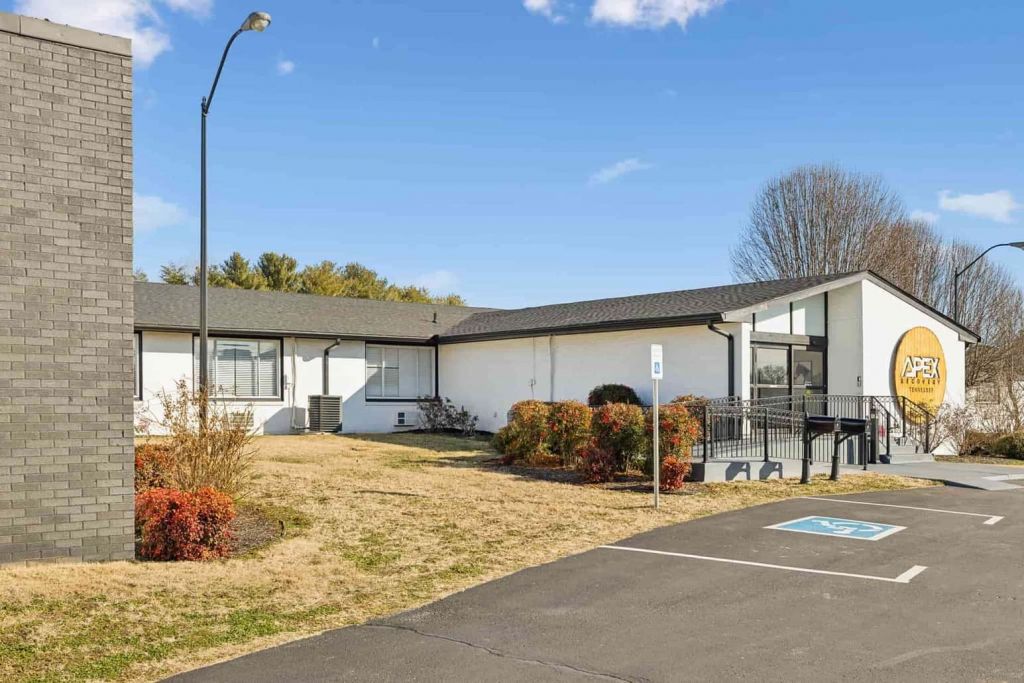
Apex Recovery operates two premium facilities in Tennessee, each offering a tranquil and supportive setting for recovery. Our Brentwood center, located at 209 Ward Circle, Brentwood, TN 37027, is strategically positioned just 11 miles from Nashville, making it an accessible and peaceful option for people seeking care.
Similarly, our Columbia facility at 2710 Trotwood Ave Suite A & B, Columbia, TN 38401, serves as a central hub for those traveling from various parts of the state. Both locations are carefully designed to create welcoming environments where people can focus on healing and accessing the tools they need for lasting recovery.
- Apex Recovery Brentwood: 209 Ward Circle, Brentwood TN, 37027
- Apex Recovery Columbia: 2710 Trotwood Ave STE A & B Columbia, TN 38401
Fill in the form below to request a call back from Apex Recovery Tennessee
Interventions in Family Therapy for Addiction Treatment
There are numerous interventions within the family systems model that a clinician may use to help a family system move toward change. Of note, several of the group therapy models include some form of mapping or studying the family structure in the immediate system or across generations. Family systems clinicians may work with the individual or family to create a genogram to map patterns of interaction or behavior within the system and use it to bring attention to current dysfunction or repeating mental health concerns in the system.
Other interventions include education and the building of communication skills including language to communicate an individual’s feelings or experiences rather than placing blame on another person within the system. Within the family systems theory, individuals and families are also encouraged to identify and implement appropriate boundaries within the system to support healthy and safe interactions.
A family counseling program is always tailored to the needs of the particular individual and family seeking treatment and will be discussed as goals are set during the initial treatment planning phase. Families are encouraged to offer insight into current functioning that is working well within their system and that which they hope to change when attending a family counseling program. Mental health and substance abuse treatment are always viewed as a collaborative process between the counselor, the individual, and the family.

Family Counseling and Therapy in Tennessee at Apex Recovery
With the full support of the family, individuals and families can see a drastic improvement in their feelings toward each other, enhanced personal growth, and the root of the problem identified and diminished. If you and your family would benefit from a family therapy program in Tennessee, call us today at (877) 881 2689.
The Benefits of Family Therapy for Addiction Treatment
As a tool for healing, family therapy is powerful. It helps the person in recovery and it helps that person’s loved ones. The client learns how their addiction has affected the entire family. The family learns more about addiction and how they might have enabled that addiction without meaning to. The whole family learns specific skills and processes that will heal the family unit and benefit each member.
Some of the excellent outcomes from family therapy include:
- Increased empathy – People without an addiction struggle to understand what it is like. Those who are addicted rarely have compassion for the people around them, as they are in the grip of a disease that leaves no room for much else. In family therapy, many misunderstandings can be eliminated and replaced by awareness and empathy. This step is vital in healing family rifts.
- Healthy boundaries – Often, in a family affected by addiction, boundaries are breached and can disappear completely. The person struggling with substance abuse may no longer recognize the norms of behavior that keep family interactions healthy. Many families engage in co-dependent and enabling behaviors. In others, anger and ultimatums create rifts. It is possible to be compassionate and have boundaries that benefit all.
- Good communication – Communication patterns in families develop over time and get less effective when someone is struggling with addiction. In family therapy, you and your loved ones can learn positive communication strategies that amplify healthy, open, vulnerable, and honest communication to develop trust and compassion.
Your family can learn to trust one another again by working together in family therapy. Where there is love, there is a way toward healing.
Apex Recovery Tennessee offers free drug and alcohol addiction assessments as part of the rehab treatment admissions process. Contact us to learn more.


